II. Illuminating in Copenhagen
I remember the uncomfortable feeling of cold air in the morning after a bad night's sleep, stepping out of the green bus. I grabbed my backpack, stood next to the big snoring guy from last night, and offered to carry one of his two large suitcases so we could walk together for a while in the same direction. The first building I saw already struck me. The white tower before us had no shape that could be named in any language I knew. The base was made of bright brick stone in an octagon, but then snow-white peaks jutted out in every direction, as if spikes were bursting from every corner of the structure. Those spikes looked exactly like the folded fronts of the paper planes I loved to build as a child – just giant, and dozens of them on every part of the high walls. Those straight but never horizontal lines magically formed terraces across the whole object, and large windows peeked out wherever brick and paper-plane spikes left room. I marvelled for a moment, then slowly climbed the stairs next to the bus station onto the giant bridge that led into the deep forest of towering housing blocks beyond. Hundreds of bicycles were chained to the thick fence along the bridge, beneath which endless train tracks stretched out in all directions. It was the densest cluster of rails I had seen since Berlin. With little more than concrete and metal everywhere I looked, I occasionally forgot the guy to my left, who asked no questions and seemed far more tired than I was. He was heading to a nearby hotel and would disappear to the toilet while I continued into the stone maze. Blessings on this phone-map thing.
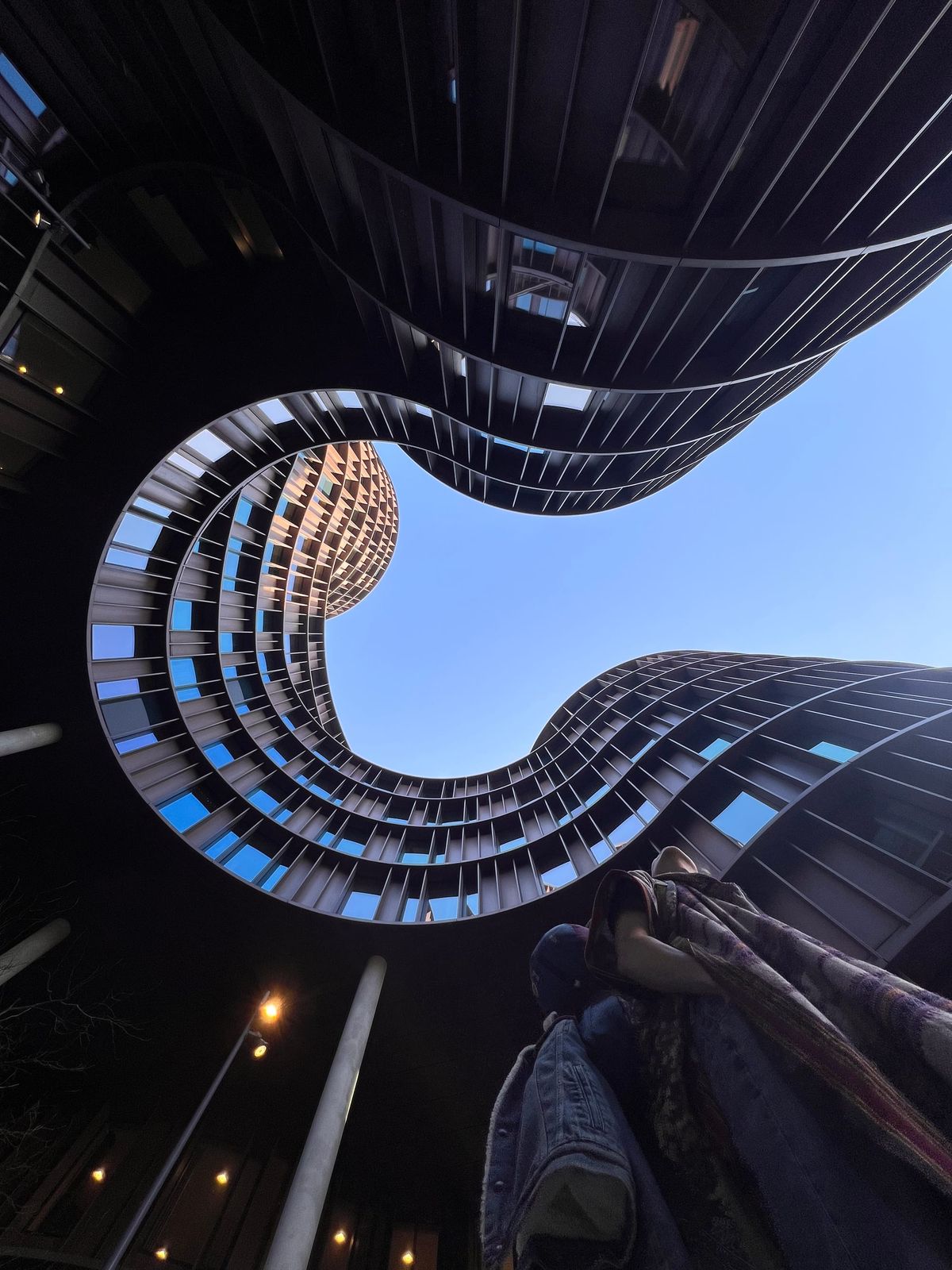
I entered Copenhagen's life, and gradually everything became more alive. It was too early in the morning; most people were still pretending to sleep at home. I passed big red stone gates with golden letters proclaiming "Tivoli" on top, enclosing forgotten laughter and adrenaline behind its doors in the broad area of what claimed to be an amusement park. I wasn't missing out – just experiencing differently. Besides, that short-lived bliss would have eaten my poor budget without a second thought. Alive. The moment called for orientation, and I found it by sitting in an open courtyard, nicely settled in the ever-rising morning sun. Like a surgeon, I dug into my backpack for the first time to find food. It went less quickly than hoped. Finding the dry oats wasn't as straightforward as imagined, and repacking everything wasn't simple either, since this backpack was filled to its maximum capacity, weighing 27 kilograms at the time. I took off some layers of unnecessary clothing and knotted them to the outside loops that could hold items. I didn't know their true purpose, but for this job, they worked as if destined. There was a lot of street to walk. A city like many, but with some beautiful buildings here and there. I guess you know the drill of a rich European city that didn't become itself through millions of people in brutal labour for centuries, but rather one that sits on a well-chosen spot for trade. The good old trading… Copenhagen is worldwide acknowledged for its incredibly high quality of life and its seemingly endless economic sustainability. It's a good place. The settlement started in the 10th century as a small fishing village called Havn. As I passed through this place, now no longer just a haven, I walked beneath buildings of steel and glass where not a single centimetre of wall was flat. The whole building consisted of five round cylinders of varying heights and widths, connected by glass and steel. Walking through the middle felt like entering a small world of shapes and reflections. If you've seen the first Doctor Strange movie, you might get an idea.
Not far from there, I stumbled upon the magnificent Rådhuspladsen, with the enormous castle-like city hall next to it and the almost even cooler fountain in the middle of the large, empty square. There, a battle between an ox and a dragon-like figure was taking place, giving each other vicious hugs of fighting despair, frozen in this epic scene by their iron coating. I took the time to sit there, since I had a whole day to pass before my evening ferry. First, I sketched the general outline: the blossom-like form of the fountain itself, then the giant running bull – its tail, its flying legs, the massive head with those intense neck muscles, the horns. One horn was buried in the soft skin of the dragon's throat. The creature was pushed to the ground; its whole body followed the force of the attack, a long tail with small wings at different ends of its scale-covered body. It was a brutal scene, and the fact that it was captured in such precise action amazed me for a long while. Around the water basin, four further monsters crawled toward the scene, apparently watching in despair. Their open mouths were filled with teeth, their heads wrapped in agony, their eyes glimmering stone-cold as they held tight to the basin's edge with their long claws. After an hour, I began to feel a little more comfortable that my stiff-necked attempt to capture the scene on paper might at least resemble something. I ate some nuts while sitting there and watched the streets slowly fill. The massive city hall building had been an umbrella for the longest while, but now the clock tower on top shone brightly. The detail on that city hall was incredible; my face gazed toward the splendid façade, and my smile was an ambivalent twist between the pain of sunlight hitting my retina and sheer marvel at gorgeous old stone. I soon continued on my way and asked a stranger woman at the bus station whether I should turn right or left. She wasn't from here, but she said people said the centre might be beautiful and pointed left, then later in the street, right. That this was only the second person I had spoken with on my travels, I would soon forget. She would almost be the last one for today, and that seemed perfectly fine. I didn't try to approach people. I didn't feel like I had arrived yet. But when I was there, I would need to speak. And to be able to do that, I had taken a job in Germany for one month until now. I worked as a salesperson in a beverage market. The work conditions stank to high heaven, but I wanted to be there because it would force me to speak with strangers and start random conversations. Like many others, maybe even yourself, I couldn't imagine just walking up to strangers and chatting. Social anxiety is a big word, and I certainly don't have it to that extent, but growing up the way I did in Germany, it doesn't feel normal to simply approach a stranger and ask questions – especially in a city. The fact that I had managed it now was important for me as a foundation and proof that I was able to do it. I just wouldn't use that social facet again today.
I stood at a beautiful spot and felt lucky to have such a view. It was a very similar picture to the one I took in Berlin, where the frame holds the Red City Hall of Berlin and behind it, in all its size, the television tower – 3x zoom, and it looks brilliant. Here in Copenhagen, I had neither of those, but instead I found a statue of a horse and a rider holding a battle axe in his right hand, lowered to the side, ready to use it while the horse was running. That was the left foreground, and almost the entire background was taken up by the immense building behind. Something about it said "King," though I wasn't sure what – maybe the three crowns stacked on top of each other on the tower. It was really quite something, and the thin fog in that picture made the statue in the foreground very dark against a light background. That statue seemed to storm the giant building, trying to achieve a revolt all by itself. A little further on, between some more really beautiful high walls, old streets, perfect pavement, and more and more visitors, I arrived luckily at the Nyhavn and enjoyed this port embedded in the modern city – though without paying enough mind to its incredible history. I did see the beauty of being able to afford a city tour. Since, if you don't investigate yourself and come unprepared to another place of importance, you might miss your chance to use your imagination on that historical place, and you surely won't learn anything new. That was me for now. Walking through the bright colours of boats along the façades of living spaces would have felt very different if I had known that this canal was dug by soldiers and war prisoners to connect the sea with the King's Square. I might have taken a moment to summon any picture I had in mind when thinking about 17th-century trade in a fast-growing Northern European city. I might have wondered what exactly it means when people write that King Christian V constructed this. Is constructing just pointing a finger at a map and telling the person next to you to get started, or was a king literally involved in any other decision and preparation? Maybe he went over the final plans after having decided the location in the first place. Or the guy was an architect and enthusiast willing to dig shoulder to shoulder in the mud of his canal together with those Swedish prisoners. Either way, he might have definitely been the one to name the place Nyhavn. If we progress historically, we realise that vessels grew larger to a point where not all could enter the port. Small-vessel traffic took over, but from the end of the Second World War, that traffic switched to land routes, and the small ships were almost completely removed from the Nyhavn. With that, this lovely little place was deserted – until someone waited long enough to think of money. History needs a certain age before people start caring about it, I guess, so only in the 1960s the Nyhavn Society was revived and established the beauty I was walking through at that time: beautifully restored historical ships, perfect pedestrian paths, accessible to tourists and locals alike. One last fun fact, and then we're done with this little side quest: do you know the legendary and beautiful mind of Hans Christian Andersen? He lived right here for 18 years and is a highly regarded author of plays, poems, novels, and travelogues – but what would this listing be if I forgot to mention the beautiful fairy tales this soul produced? I had received the great gift of being in possession of a book from three generations in Canada – the oldest book I was ever allowed to touch and read. And in it blossomed the worlds of Hans Christian Andersen's fairy tales. I shall never forget them. The eldest of my Canadian community once mentioned that people thought Andersen might have been a Rosicrucian, but at that time I didn't really understand …
As I passed through this beautiful harbour, which in my memory had so much colour everywhere under the cold sunshine, I came out to the sea and saw the other side of Copenhagen across the water. There were building blocks in a design I could never have imagined. A skeleton of grey stone, and every space between was glass. And further to the left, a giant piece of architectural art took my attention: the Royal Danish Opera. It makes you wonder what you learned about physics and gravitation. The body itself consists of a round bubble front, but what really stands out is the roof – a most giant flat top that not only covers the opera building but extends over it by many metres in all directions, to the point where there is no way around wondering how such a thing could ever exist and how those giant rectangular wings wouldn't simply drop, break, and splatter on the ground. Blessed is a country without earthquakes. As I stared at this house of tones, I came around a nice café with a great glass front, golden light inside, wooden interior, and vegetation growing along, with a perfect view of the opera. Here begins a wooden platform, built on pillars in the water, stretching on for maybe two hundred metres across the surface. It is just flat wooden ground, and its scale is again something that gives a tiny human a lot to wonder about. There was a bench on it where I would sit, but while walking there, I couldn't ignore a minor-major detail: in the centre of happenstance, a project was showcased. It made a vibrating sound, a swinging frequency, and it poured out of those triangles – three metres high, over forty of them, layered in a long straight tunnel. The lower line of each triangle was cut out so that pedestrians could easily walk through and experience something unique. The sound I was describing echoed softly and warmly from these triangles. They were surround speakers, and the sound came not only from all angles – left, right, and above – but also from the endless depth of what must have been almost fifty metres of walking distance through the tunnel of sound, enhanced by the LEDs in each of those triangles. The frequency was nice, but what if it were night and you could see the light even better, and what if they played Pink Floyd's The Dark Side of the Moon – the best album of all times? Well, I'm sure someone had that in mind, but there are certain regulations in the world of tourism and money that would take that free and beautiful decision away from you. But never mind – this triangle music thing I loved as it was. You just have to realise that the colour around the triangle and the icon itself absolutely represent the cover of the named Floyd album. Oh well. I took a seat on the wooden benches and kept staring at this somewhat unbelievable opera building. I wanted to bet that this roof had no influential impact on the sound inside the round opera house itself. Maybe they needed to use up leftover materials, or they realised they had built too close to the water and couldn't grow the opera house any further, so they just expanded the roof in all directions. If someone in 15,000 years digs this stuff up, they will surely ask if this is art or if it can go to the bin.
I meditated. I wore a black rain jacket, black boots, fancy jeans from Canada, and the skin on my hands was not doing well. The water from my thermos bottle was freezing cold – something I might have appreciated if it had been six months later and thirty degrees warmer. This meditation of mine, which I can't really describe since I don't know you as a reader and your stance on this mental practice, took not even twelve minutes – and then I had a visitor. It was Epa. Sometimes you get lucky by stopping and quitting the search in the unknown. To accept being lost and to give in is the first step toward getting better. Those are the times when you are found – in this case, by Epa, a student, a creative mind, and a friendly person for a bench chat. We exchanged our love for literature; she told me of her little book, and I in turn chatted about my gift from Nina, The House of Women, set in Paris. We spoke for a while, and I guess in another setting we might have become good friends, spending the evening together, sometimes going for walks or cooking favourite meals. I guess we both searched for this type of person, and after we introduced ourselves, we knew we wouldn't find it in each other. That subtle realisation and our appreciation for each other painted the canvas of our shared time, with not much more to think of than the beautiful present. After a while, I brushed my teeth for the second time that day – I found it very handy to have a brush right there in your belly bag – then walked all across the giant wooden platform and packed my stuff back up. It felt like it was time again. And there went Epa. I don't think we spoke about the Simpson movie, but I certainly thought about it as I was introduced to the first Epa of my life. Either way …
What followed was a walk through the city along the incredibly beautiful Amalienborg, with its light green-blue roof that looked just like very much aged copper. The saying carved in stone over the giant entrance port read: »HERRENS ORD BLIVER EVINDELIG« – and that really touched my heart. I guess it has a meaning and is not just made up, or worse, an abbreviation. I am really scared of abbreviations. There is nothing that sounds dumber than an abbreviation you speak as if it were a normal word because you weren't aware of the short form – happens to me almost every day. I found a bakery in the side street turning right; I went in, heard the prices, went out, went back in because I was hungry, and then bought the first loaf of bread. There would be a few more coming, and it would be my main food source for the following adventure. The bread was nonetheless really yummy, and the person selling it to me was also extraordinary – like a friendly character on the side of the path when someone tumbles through a fairy tale and makes first acquaintances. Sweet. What I didn't realise until three weeks later was that I had completely missed the city centre. I went on in the direction of the harbour, and there a park opened up – quite beautiful – and I entered from one side. Its human-made hills enclosed water canals. On each stretched hill, there was a yellowish path for pedestrians, and the green grass shone happily. It was too early for some flowers to come out yet; it was just green, with water and some birds. Only one tree type was blossoming – and that blossom felt like the fur of a baby kitten. In German, Weidenkätzchen – but who am I to be able to translate that? A magpie sat among those little furry grey blossoms and looked at me. Luckily I had nothing of real worth on me. Are magpies officially thieves, or is that a tale for children? My dad sounded very convinced when he told me as a child that his golden wedding ring was stolen by a magpie. Honestly, I couldn't judge it now. Before I entered the pathway to walk towards that large windmill somewhere inside the park, I took off the winter boots my mum had urged me to bring. I had spent months of the Canadian winter barefoot on Vancouver Island, but she didn't seem convinced. Now I wore these shoes, and first doubts about the whole travel plan came up. They were horrible – I wasn't sure if I could wear them even another day. I didn't like shoes, and it seemed like I would have to get used to them for a long while. Luckily, I had barefoot shoes with me – my Christmas present from last year. Once you recover from the shock of how weird and unusual they look, you have found a beautiful and wonderful option that helps me a lot. They were attached to the back of my backpack, and my boots joined them there. I continued barefoot and loved it a lot. My hair kept my head nice and warm, though I was now cursed with that length where the wind shoves hair into your mouth from time to time. I did love this blond mane, but because I had never let anyone cut it since it started growing ruthlessly 20 months ago, I looked like a person who simply couldn't afford it. My mum was probably right, as always, when she called me handsome – but even she mentioned that I would benefit greatly from a cut. There was a concept behind why I didn't do it, but we haven't really gotten to know each other yet, so let's leave it at that for now.
The windmill didn't turn and was almost deadly boring for someone without context. Honestly, I didn't really even understand why these things existed. But since that was a shame, I decided to do proper research on it and tell you afterwards what I'd learned. Time passed, and I was barely the same person as before. The knowledge revealed to me about wind-driven mills had elevated my consciousness in terms beyond words. To keep it short: windmills are old and were useful. Now they aren't, but we have better things anyway. The first wind machines have been found throughout history, but the concept of a modern windmill was first documented in northwestern Europe during the 12th century – though, as usual, the best European inventions were often stolen from much more developed civilisations. The horizontal windmill was first introduced in Persia, and even much earlier, the Mesopotamian realm had made use of similar devices. What changed when they were introduced to Europe was the vertical construction. By the way – it was the travellers of those earlier eras who broke through lands formerly unknown to their civilisations and thus discovered new knowledge of literally all sorts. In that way, the invention of the windmill passed from Persia into China and Europe. Europe made its own modifications and introduced horizontal windmills – the old ones we sometimes see in places like the one right in front of me in the middle of Copenhagen. What I learned was that these constructions were obviously used to mill farmers' grains and cereals, but many mills also had the ability to turn and adjust their body towards the wind – the whole giant structure was movable. I had never seen such a thing in action, but it must be true, otherwise a windmill in such changeable winds would have little use. There are post mills, basically a small house on top of a single pillar, where the whole house was turnable with the sails attached to it. The tower mill is that chunky finger-hat-like thing, and there it is usually the cap of the mill that adjusts to the wind direction – that's the key. But the transition was slow and painful. For a long time, a mill had to be stopped and then adjusted. In later times, little extra sails or even turbines adjusted it automatically. Don Quixote fought them, but it ended in a draw – literature will never forget him, but the windmills he still could not defeat. Let's make it clear: these old structures wouldn't stand today if they weren't visually appealing. Our modern wind turbines won't be as privileged.
I moved on and soon forgot all about it. My way wasn't much longer. After missing the route once and then realising that time is indeed infinite, I got into a hurrying mood to catch the ferry at 7 p.m. Shortly before boarding, I put my shoes back on, entered the ferry port building, struggled quite a while to find a way to make my passport work with the check-in machines, but finally managed to walk along the gangway into the giant ferry – only the second time in my life on such a boat monstrum. I found my room without much trouble, left the burden behind, and later realised I was alone in that little chamber. I spent a long time walking around the ship. There were many places offering food and drinks, but none of it was affordable. There were some little glass vitrines with model boats and pictures and histories written about them. I wasn't into boats and spent an hour reading. Excitement is relative. Sometimes I sat on benches and watched people; sometimes I walked the endless giant loop; sometimes I watched the darkness outside the windows. My phone was left in the room. I had no internet, and buying WiFi wasn't really an option. There was this weird feeling of excitement in my belly – not entirely pleasant, but if it were missing, everything would be boring. The ship drove steadily. The food inside my chamber was most delicious. I even entered the tiny shower and did what seemed necessary given my degree of bodily odour. I undressed for sleep, slept incredibly well – it had been a long while since I had lain on a mattress – and woke up at 8 a.m. the next morning. I dressed warmly, trying to find the middle ground between not dying of heat during the rest of the boat stay and not freezing immediately upon exiting into Norway's March. I was still not sure if I had actually thought that through well – definitely not! I planned on sleeping in those freezing conditions outside. I had looked at a map of Oslo back at home and wondered if I could sleep in big parks. Google's answer was no! At this point, I really didn't know what was going to happen. I had slept two nights in a tent when I was at home in Bavaria while there was snow outside – not a single hour of sleep in both nights. When I gave up in the morning, my phone was dead because its battery had become too cold. At my grandparents' before starting the journey, I slept again in the tent – tried, and on the second try I went inside during the night, but I called it a success. I felt very much ready for anything that could happen – and that is called idiotic naivety. My mum rightly fears the grizzlies and the deadly cold. Some people with more travel experience asked if I was aware of what I was about to do there. And no, I wasn't! But as long as this ferry didn't go down in its last few metres, there was barely anything that could stop me now! I think we were ready for Norwegian soil!
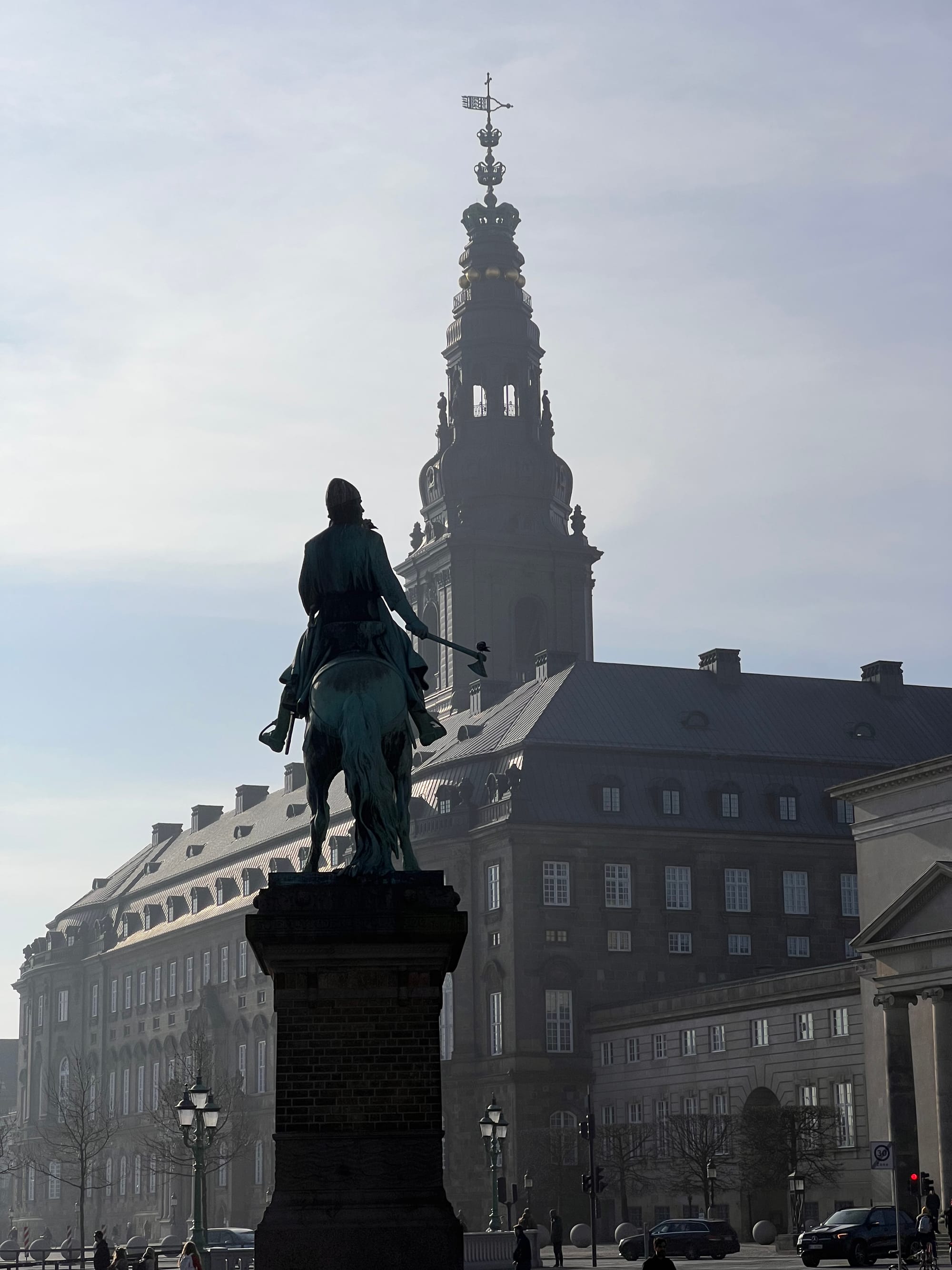
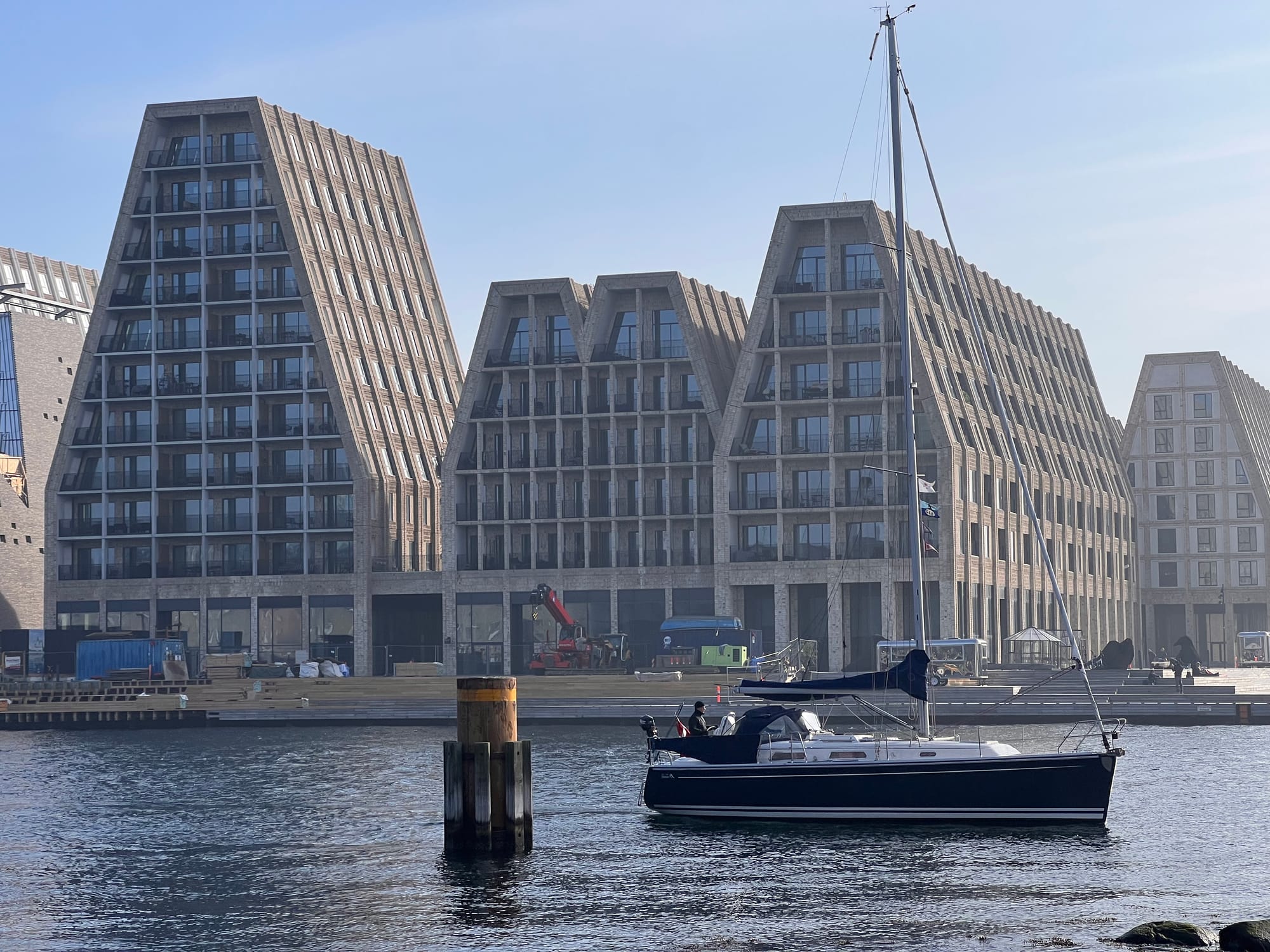
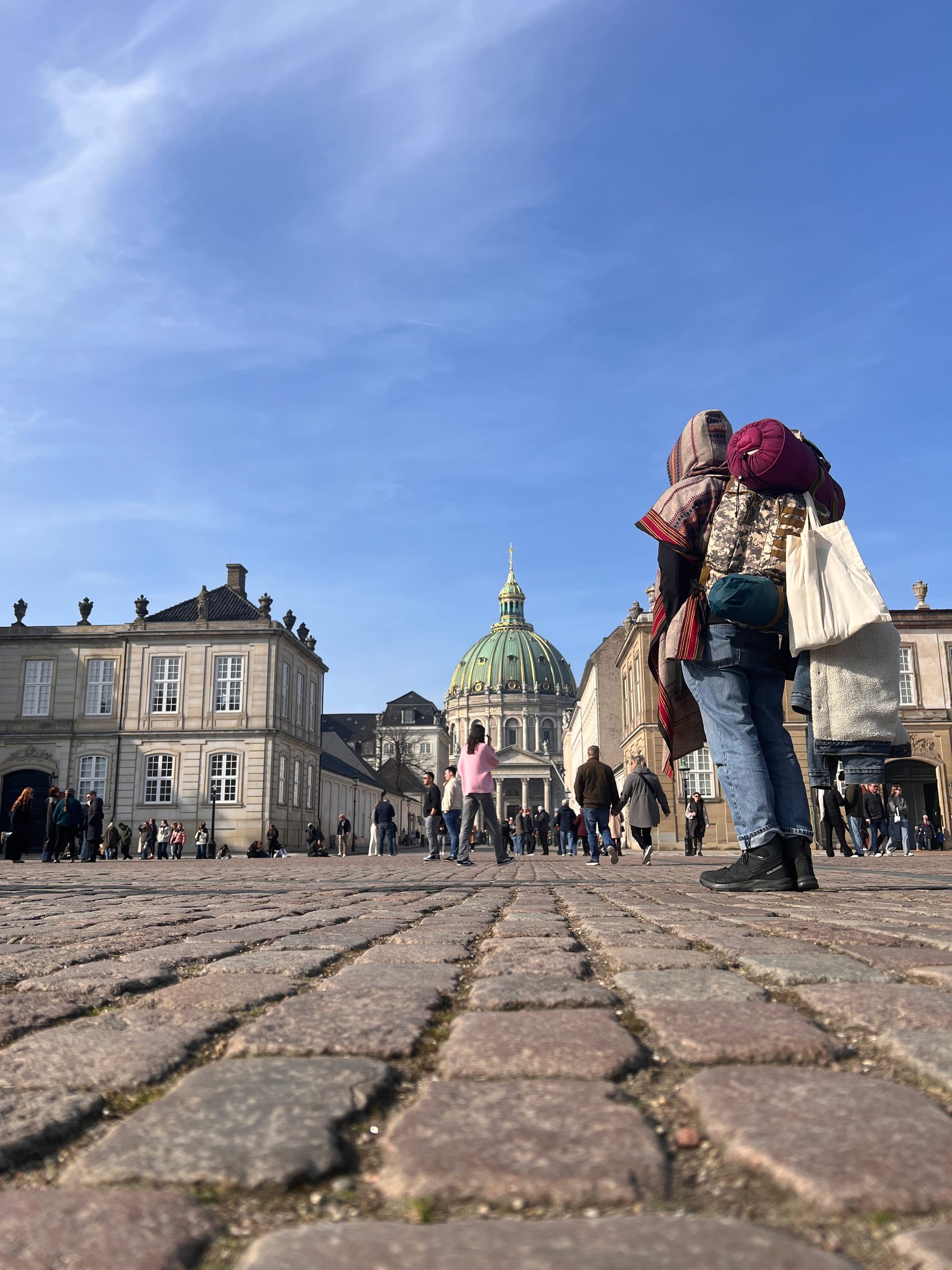
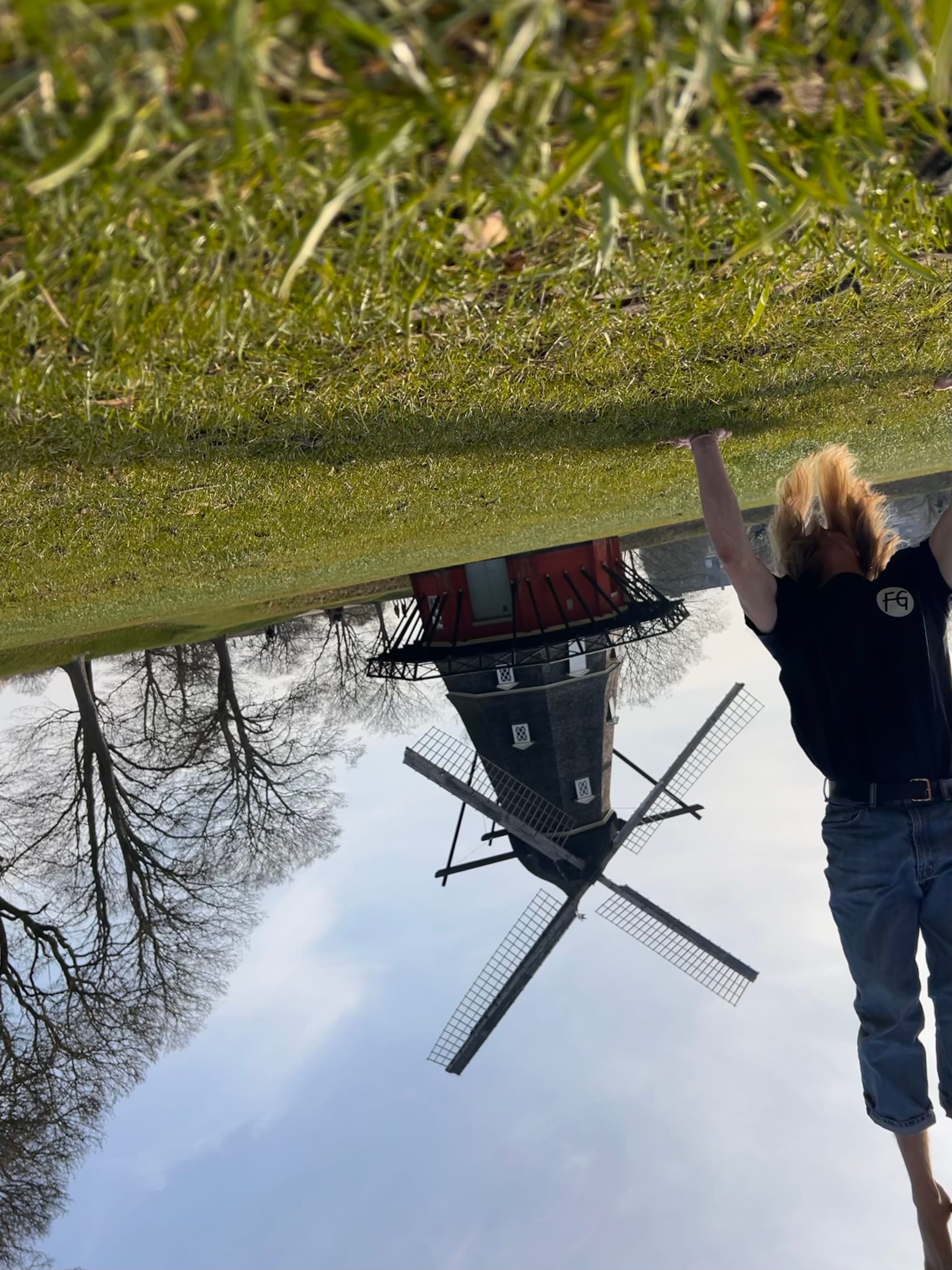
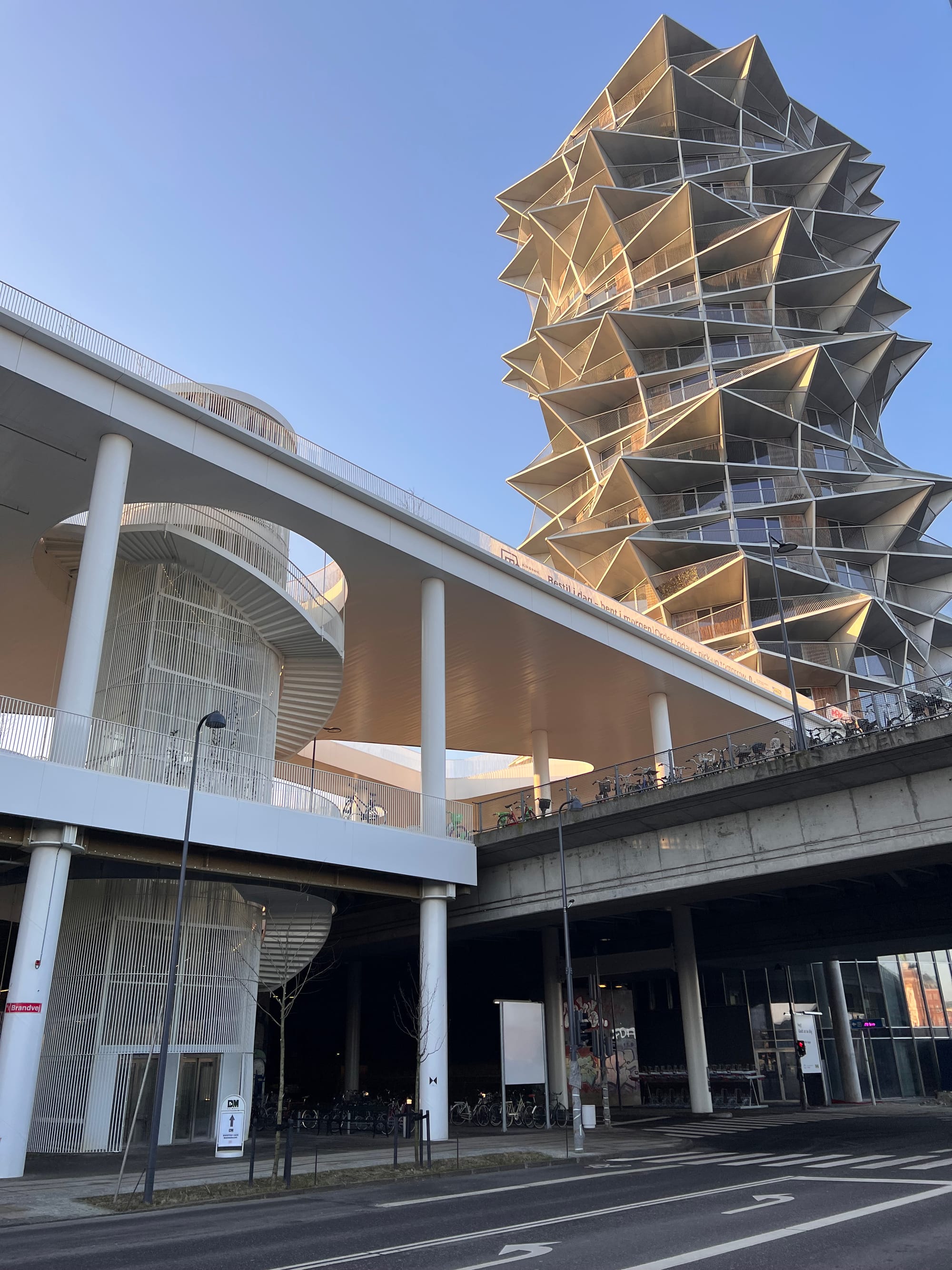
1Christiansborg Palace and the horse riding warrior in front - 2Building blocks just next to the Royal Danish Opera - 3The street in front of the Amalienborg - 4A Hippie and a wind mill - 5That weird paper plane building I mentioned right in the beginning at the bus station